


2003 Toyota Highlander Misfire with Low Mileage What Repair Matters Most

A 2003 Toyota Highlander with only 27,000 miles is not a worn-out old SUV. It is a low-mileage vehicle with age-related problems.
Those are very different things.
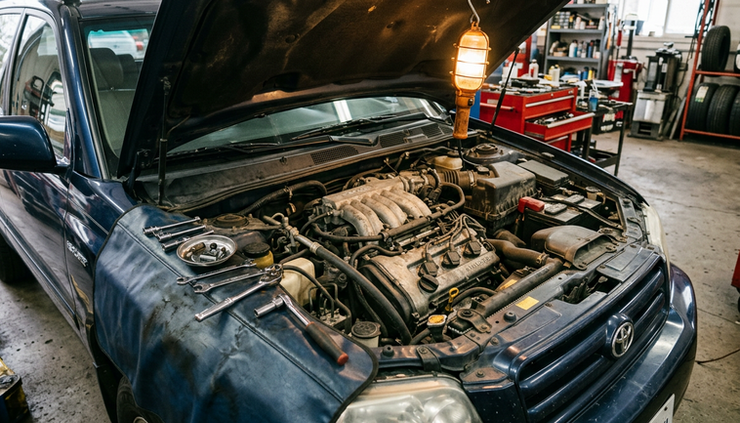
If it has codes `P0301` and `P0306`, the engine computer is seeing misfires on cylinders 1 and 6. On a six-cylinder Highlander, that can feel scary, especially if the vehicle had to be towed. But with mileage that low, the most likely causes are often basic ignition, old fuel, fuel delivery, or cracked rubber parts rather than a tired engine.
The repair that matters most is not simply “replace the most expensive part.” It is finding out whether the misfire is caused by age, sitting, or actual engine damage before authorizing a large estimate.

A 27,000-mile Highlander changes the diagnosis
Most 2003 Highlanders on the road have far more mileage. Many are well over 150,000 miles by now. So when a 2003 Highlander has only 27,000 miles, the first question is not, “Is the engine worn out?”
The better question is, “What happens to a vehicle that barely gets driven for more than 20 years?”
Low mileage helps in several ways. The piston rings, bearings, transmission clutches, suspension joints, and interior may have far less wear than usual. If the vehicle was stored well and serviced at least occasionally, it could be worth saving.
But time still attacks the parts that do not care about mileage.
Rubber dries out. Fuel breaks down. Electrical insulation gets brittle. Moisture can collect. Spark plugs can corrode. Fuel injectors can gum up. Vacuum hoses can crack. A vehicle can be “low mileage” and still have several parts that are simply old.
That is why a 2003 Toyota Highlander misfire with low mileage should be handled as an age-and-storage diagnosis first, not as an automatic engine replacement situation.
The key detail is what happened before the tow.
If the Highlander only had a check engine light but still ran fairly smoothly, the problem may be minor. If it shook badly, struggled to accelerate, flashed the check engine light, or smelled like fuel, the misfire was more serious and should not be driven until repaired.
A flashing check engine light usually means the misfire is strong enough to risk catalytic converter damage. In that case, towing it was the right move.
What P0301 and P0306 mean on this engine
Code `P0301` means the computer detected a misfire on cylinder 1. Code `P0306` means it detected a misfire on cylinder 6.
A misfire means one or more cylinders did not fire correctly. The engine needs three things for each cylinder to run:
Spark
Fuel
Compression
If one of those is missing or weak, the cylinder misfires.
On a low-mileage Highlander, spark and fuel problems should be checked before assuming compression problems. Compression problems can happen, but at 27,000 miles they are less likely unless the engine overheated, sat with internal corrosion, suffered timing issues, or had another major event.
The most common starting points are:
Old or fouled spark plugs
Weak ignition coils, plug wires, or boots
Bad gasoline or water-contaminated fuel
Dirty or stuck fuel injectors
Cracked vacuum hoses or intake leaks
Rodent damage to wiring
Low battery voltage after sitting
The fact that two cylinders have codes matters. If the two cylinders failed at the same time, a mechanic should look for a shared cause. That may include fuel quality, an intake air leak, weak voltage, wiring, or an ignition component pattern, depending on the exact engine setup.
If only one cylinder was misfiring, swapping parts from one cylinder to another might quickly confirm a bad coil or plug. With two cylinders, the shop should still test carefully instead of guessing.

The first repair that usually matters most
For this Highlander, the first repair priority is usually a proper ignition and fuel-quality diagnosis, with spark plugs near the top of the list.
Spark plugs are mileage-based, but they are also age-sensitive. A vehicle that sits can develop deposits, corrosion, or fouling. If the plugs are original from 2003, they are more than old enough to justify replacement during misfire diagnosis.
That does not mean the shop should replace every part in sight. But original spark plugs on a 23-year-old vehicle are a reasonable concern, even with only 27,000 miles.
The best approach is:
Confirm the codes and save the freeze-frame data.
Inspect the plugs from the misfiring cylinders.
Check ignition coils, wires, or boots for cracks and carbon tracking.
Verify fuel quality.
Check for vacuum leaks and intake leaks.
Perform compression or leak-down testing only if the misfire remains unexplained.
This order matters because it keeps the estimate grounded. It starts with likely, age-related causes before moving into expensive engine concerns.
Spark plugs deserve serious attention
If the plugs are old, replacing all six is often smarter than replacing only the two linked to the codes. The labor overlap can be significant on a transverse V6 because some rear-side plugs may be harder to access.
A shop should be able to show you what the removed plugs look like. That can tell a useful story.
Dry, worn, or corroded plugs point toward age and neglect. Wet fuel on a plug may point toward no spark or an injector issue. Oil fouling could raise a different concern. A plug that looks steam-cleaned could point toward coolant entering a cylinder, although that is not the first assumption on this mileage alone.
Ask Wilhelm, or any shop preparing the estimate, whether the spark plugs appear original. If they do, replacing them is not just a repair. It is overdue maintenance.
Ignition coils and wires should be tested, not guessed
Ignition coils can fail with mileage, but they can also fail from age and heat cycling. The rubber boots and wiring insulation can deteriorate long before the vehicle accumulates high miles.
A good technician can often move a suspect coil, wire, or boot to another cylinder and see whether the misfire code follows. That is stronger evidence than simply saying, “It needs coils.”
If the estimate includes all ignition coils, ask why.
There are times when replacing a full set makes sense, especially if several are cracked or brittle. But if only one tests bad, replacing only the failed part may be enough. The right answer depends on access, condition, and the owner’s goal for reliability.
For a vehicle this old, I would be open to replacing aged ignition parts. I would not approve a large ignition parts bill without a clear explanation.
Old fuel may be the hidden problem
A rarely driven vehicle can have fuel problems even when the tank looks full.
Gasoline does not stay fresh forever. Over time, it can lose volatility, absorb moisture, and leave varnish deposits. If the Highlander sat for months or years, old fuel could contribute to rough running, misfires, hard starting, or poor acceleration.
That is especially relevant if the misfire appeared after someone tried to start and drive the vehicle following a long rest.
A shop should check whether the fuel smells stale or contaminated. If the fuel is clearly bad, the repair may involve draining the tank, adding fresh fuel, replacing the fuel filter if applicable, and cleaning or testing the injectors.
Pouring in a bottle of fuel cleaner is not a proper fix for severely old gas. It may help mild deposits, but it will not magically undo a tank of stale fuel.

Fuel injectors can stick after sitting
Fuel injectors have tiny openings. When fuel dries and leaves deposits, an injector can spray poorly or stick. A weak spray pattern can cause a lean misfire on one cylinder. A leaking injector can cause a rich misfire or a fuel smell.
For `P0301` and `P0306`, the shop may need to test injector operation if spark checks out. That can include listening for injector clicking, checking electrical pulse, measuring resistance where appropriate, or using more advanced testing.
Injector cleaning may help if deposits are the issue. Replacement should be based on testing, not just because the code names a cylinder.
Vacuum leaks and old rubber are easy to miss
A 2003 vehicle with 27,000 miles still has 23-year-old rubber. That includes vacuum hoses, intake ducting, PCV hoses, engine mounts, coolant hoses, belts, and seals.
A cracked vacuum hose can let extra air into the engine. That creates a lean condition, which can trigger rough running and misfire codes. Intake leaks are especially common on older vehicles because rubber hardens and splits.
The shop should inspect:
Vacuum hoses
Intake air duct between the air box and throttle body
PCV hose and valve
Brake booster vacuum hose
Electrical connectors near the intake
Wiring for rodent damage
Rodent damage deserves special mention. Cars that sit for long periods can attract mice or other pests. They can chew wiring, nest near the intake, or damage insulation. A misfire from chewed injector or coil wiring may look like a bad part until someone inspects closely.
This is why the diagnosis should include a visual inspection before parts replacement.
When to worry about serious engine problems
Even with low mileage, a mechanic should rule out serious problems if the basic checks do not explain the misfire.
Compression testing can show whether each cylinder can seal and build pressure. A leak-down test can help locate where compression is being lost, such as past the valves, rings, or head gasket.
You do not have to start there unless symptoms point that way.
More serious concerns become more likely if the Highlander had:
Severe shaking that did not improve
White smoke from the exhaust
Coolant loss
Overheating
Milky oil
Loud mechanical knocking
Misfire that stays on the same cylinder after spark and fuel parts are swapped
Very low compression on one or more cylinders
At 27,000 miles, I would not assume the engine is bad based only on `P0301` and `P0306`. I would ask for test results before authorizing any major engine repair.
If a shop recommends an engine replacement, valve job, head gasket repair, or catalytic converter replacement, ask for the evidence. Misfire codes alone are not enough.
How to evaluate Wilhelm’s estimate before saying yes
Before approving repairs, ask Wilhelm for a clear breakdown. A good estimate should make sense even if you are not a mechanic.
Ask these questions:
Question to ask | Why it matters |
What codes are stored besides `P0301` and `P0306`? | Extra codes can point to fuel, air, sensor, or system-wide problems. |
Was the check engine light flashing? | A flashing light means the misfire was severe enough to risk converter damage. |
Did you inspect the spark plugs? | Plug condition can reveal age, fouling, fuel, oil, or coolant clues. |
Are the plugs original? | Original plugs on a 2003 vehicle are strong candidates for replacement. |
Did the misfire move when parts were swapped? | That helps prove whether a coil, wire, or boot is actually bad. |
Was fuel quality checked? | Old gas is a real concern on a rarely driven vehicle. |
Was compression tested? | This matters if basic ignition and fuel checks do not solve it. |
The estimate should separate diagnosis, parts, and labor. It should also explain what is required now versus what is preventive.
A practical first authorization might include diagnostic time, spark plug inspection or replacement, ignition testing, fuel-quality inspection, and a vacuum leak check. If those steps reveal the cause, the next repair decision becomes easier.
Be more cautious if the estimate jumps straight to expensive parts without test results.
Do not ignore age-based maintenance after the misfire is fixed
If the Highlander runs well after the misfire repair, it may still need maintenance based on age rather than miles.
The timing belt is a major one to discuss. Many engines from this era use a rubber timing belt, and rubber ages even when the vehicle is parked. If there is no record of timing belt replacement, ask the shop to inspect and price that service separately. It should not be mixed into the misfire diagnosis unless there is evidence it is related.
Also consider:
Engine oil and filter
Coolant
Brake fluid
Transmission fluid condition
Power steering fluid
Belts and hoses
Tires, even if tread looks good
Battery and charging system
Brake inspection for rust or sticking calipers
Tires are a big safety item on low-mileage older vehicles. A tire can have plenty of tread and still be unsafe due to age cracking. The date code on the tire sidewall matters.
This is where the Highlander’s low mileage becomes good news. Once the age-related issues are handled, the vehicle may have a lot of useful life left.
The repair that matters most is the one backed by proof
For a 2003 Toyota Highlander with only 27,000 miles, `P0301` and `P0306` should not automatically lead to panic. The vehicle is old, but it is not high-mileage. That points the diagnosis toward old spark plugs, aging ignition parts, stale fuel, injector deposits, cracked hoses, and wiring concerns before expensive internal engine repairs.
The first repair that matters most is usually the basic one done correctly: confirm the misfire cause, inspect the plugs, test the ignition system, check the fuel, and look for air leaks.
If Wilhelm’s estimate follows that logic and explains the evidence, it may be reasonable. If it skips testing and goes straight to a large parts list, ask for clarification before authorizing the work.
A 27,000-mile Highlander from 2003 can still be a very good vehicle. The goal is to fix the real misfire, catch the age-related maintenance, and avoid replacing parts that have not been proven bad.



Comments