


What Happens Tonight When an EFC Young Adult Loses Housing and No Placement Is Available

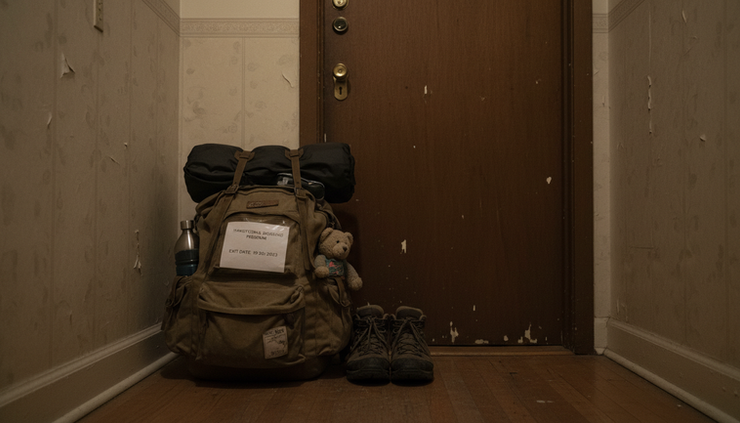
A young adult in Extended Foster Care can be connected to the system and still have nowhere safe to sleep tonight.
That is the narrow problem worth naming.
Arizona already has Extended Foster Care, often called EFC. It has Transitional Housing. It has Supervised Independent Living, or SIL, for eligible young adults. It has homeless services, shelters, outreach teams, and coordinated entry systems. The question is not whether those services exist. They do.
The question is what happens in the gap.
A young adult loses a couch, leaves a placement, gets locked out, has a conflict with a roommate, or cannot return to a host home. The next appropriate placement may be identified tomorrow, next week, or after paperwork clears. But the housing loss happens tonight.
That creates a bridge problem. It is not a reason to duplicate EFC, Transitional Housing, SIL, or homeless services. It is a reason to study the hours and days between housing loss and placement.
The real issue is the space between systems
A young adult in EFC may have a case plan, a case manager, and an intended placement path. That does not always mean there is an immediate bed.
A young adult may also qualify for homeless services. That does not always mean the best available shelter is appropriate, available, or safe for that person that night.
The gap appears when the young adult is already known to a system, but no system can produce the right next step fast enough.
This matters because programs are often designed around eligibility and placement type. The crisis is designed around time.
A placement may require:
A vacancy
Approval from a provider
Transportation
A safety assessment
Documents or signatures
A match with the young adult’s needs
A staff member who can authorize the move
A plan for pets, belongings, medications, school, work, or children
None of those steps are unreasonable. Many protect the young adult and the provider. But they can take longer than one evening.
The bridge question asks a tighter thing: where does the young adult safely stay while the appropriate process catches up?
That is different from creating a whole new housing program. It is closer to identifying a missing emergency function inside the current system.
Existing services do not always solve the overnight gap
Arizona’s service structure includes several tools that can help young adults who have experienced foster care. Each one has a role. The bridge problem shows up when those roles do not cover the same time window.
Existing service | What it is designed to do | Where the overnight gap can appear |
Extended Foster Care | Support eligible young adults after age 18 through continued case planning and services | The young adult may remain eligible, but the immediate placement may not be ready |
Transitional Housing | Provide longer-term housing support tied to stability goals | Intake, availability, and fit may not happen the same night |
Supervised Independent Living | Support young adults in more independent settings | A unit, host arrangement, or approval may not be available immediately |
Homeless services | Respond to people without safe housing | The available option may not match the young adult’s safety, developmental, or foster care needs |
The problem is not that any of these services are failing by definition. A system can have reasonable rules and still produce unsafe overnight gaps.
For example, a Transitional Housing provider may be the right long-term option, but the opening is not until Monday. A SIL setting may be appropriate, but the approval cannot happen after hours. A shelter may have a bed, but the young adult may feel unsafe there, may not meet entry rules, or may risk losing contact with the foster care team.
A bridge response should not erase those distinctions. It should keep the young adult safe while preserving the path to the right placement.

The right research question is specific and measurable
A broad question like “Do we need more housing for youth?” can become too large to answer cleanly. It leads to debates about programs, budgets, eligibility, and long-term models.
A narrower question can produce useful evidence:
What happens tonight when an EFC young adult loses housing and the next appropriate placement is not available tonight?
That question can be researched. It can be quantified. It can also reveal whether the issue is rare, common, seasonal, localized, or tied to predictable system bottlenecks.
The research does not need to start with a solution. It should start with the episode.
A housing-loss episode might include:
The date and time housing was lost
The young adult’s EFC status
The reason the prior arrangement ended
Who was contacted first
Whether after-hours help was available
Whether transportation was available
Whether a safe temporary option was offered
Where the young adult slept that night
How long the gap lasted
What placement or service eventually resolved it
Whether the young adult stayed connected to EFC during the gap
The key is to measure the gap without blaming the young adult or the frontline worker.
Many housing losses happen under stress. A young adult may leave because a home no longer feels safe. A caregiver may end an arrangement suddenly. A roommate conflict may escalate. A hotel stay may expire. A family member may withdraw support. A young person may miss a curfew, lose income, or experience a mental health crisis.
The facts matter, but the research should avoid turning crisis notes into character judgments.
The overnight gap has several common shapes
Not every gap looks the same. If Arizona wants to understand this problem clearly, it should sort the episodes by type.
A placement is identified but not ready
The next option may already be known. The young adult may have a provider, caseworker, or plan. The barrier is time.
This is the cleanest bridge case. The system does not need to search for a long-term answer. It needs a safe stopover.
That stopover may be one night, a weekend, or a few business days. The difference matters because a one-night gap and a ten-night gap require different responses.
The young adult is eligible but the match is unclear
Sometimes EFC eligibility is not the hard part. The harder question is what setting fits.
A young adult may need a placement close to work, school, medical care, or a child care arrangement. They may need a setting that allows a partner, a baby, a pet, or specific privacy. They may need a quieter setting because of trauma, anxiety, or disability.
If the system treats all emergency beds as the same, it may create a placement that fails quickly.
The bridge period should include enough support to find a realistic match, not just any open bed.
The crisis happens after-hours
Many housing crises happen outside normal business hours. Even if the formal system has the right tools, those tools may be hard to access at 8:00 p.m. on a Friday.
This is often where the problem becomes invisible. If the young adult solves the night alone, by sleeping in a car or staying with someone unsafe, the system may never count that as a failed handoff.
After-hours data is essential. Without it, the problem will look smaller than it is.
The young adult avoids the formal shelter system
Some young adults will not use adult shelter even when they have no other safe option. That choice may come from fear, past harm, rules they cannot meet, lack of transportation, or concern about losing belongings.
A youth-centered bridge response should ask why.
If the only available answer is a setting the young adult will not use, the system may appear to have offered help while the young adult remains unsheltered.

A bridge response should be limited, fast, and connected
The strongest bridge model would not compete with EFC, Transitional Housing, SIL, or homeless services. It would connect them.
A useful bridge response would have a few clear traits.
It would be short-term by design.
The purpose is not to create another long-term placement category. The purpose is to cover the immediate safety gap until the next appropriate option is ready.
It would be available after-hours.
If the crisis happens at night, a Monday morning solution is not enough. The response has to match the timing of the problem.
It would preserve connection to EFC.
The young adult should not have to fall out of the foster care pathway to get emergency help. A temporary bed should not break case planning, benefits, or placement work.
It would include transportation.
A bed that a young adult cannot reach is not a real option. Transportation is often the difference between a plan and a night outside.
It would have a clear handoff.
The bridge setting should know who takes over the next day, what decision is pending, and what information must move with the young adult.
It would protect dignity.
A young adult in crisis should not have to retell painful details to every person in the chain. The bridge process should gather only what is needed for safety and next steps.
A bridge response could take different forms. It might include flexible emergency lodging, a youth-specific short-stay bed, a host-home backup, or a contracted after-hours placement option. The right model depends on local capacity and legal requirements.
The form matters less than the function: safe, temporary, fast, and connected to the next placement.
What should be counted before building anything new
Before creating a new service, Arizona can study the size and shape of the gap. Good research would answer practical questions.
How often does this happen?
Anecdotes can show that the problem is real, but planning needs counts. The system needs to know how many EFC young adults experience an overnight housing gap in a month, a quarter, or a year.
How long do the gaps last?
A one-night gap points to one type of solution. A repeated pattern of five-to-seven-night gaps points to another. Duration changes cost, staffing, and risk.
Where do young adults sleep during the gap?
This is sensitive information, but it is central. The answer may include shelters, cars, motels, friends’ homes, outdoor locations, hospital waiting areas, or unsafe relationships. The goal is not surveillance. The goal is to understand risk.
Which system touchpoints happen first?
Some young adults call a case manager. Others call a former foster parent, a hotline, shelter intake, law enforcement, a friend, or no one. The first contact often shapes the rest of the night.
What blocks the next placement?
The barrier may be bed availability, paperwork, background checks, transportation, provider rules, lack of after-hours authority, or a mismatch between the young adult’s needs and available settings.
What would have prevented the unsafe night?
This is the most useful question. It turns a crisis story into system design. The answer might be a ride, a one-night motel voucher, a staff person with authority, a youth-specific emergency bed, or earlier conflict mediation.
The research should include young adults without making them prove pain
Young adults with foster care experience often know where the system breaks. They can describe the difference between a service that exists on paper and a service that works at midnight.
Their input should shape the research, but the process must be careful.
Interviews should be voluntary. Questions should focus on the housing episode, not force a full personal history. Participants should know how their information will be used. If compensation is offered, it should be fair and not coercive.
The research should also include frontline staff. Case managers, shelter workers, after-hours responders, Transitional Housing providers, SIL providers, and youth outreach teams often know the same gap from different angles.
A simple method could combine:
De-identified case reviews
Short staff interviews
Young adult listening sessions
After-hours call tracking
Provider capacity snapshots
A time-to-placement review for crisis episodes
This kind of research does not require inventing a theory. It requires following the night from the moment housing is lost to the moment a safe next step begins.

The goal is to make the bridge visible
Systems often count services better than they count gaps.
They can report how many young adults are in EFC, how many beds exist, how many referrals were made, or how many placements occurred. Those measures matter. But they may miss the night when nothing fit.
That uncounted night can change everything.
A young adult who sleeps outside may lose belongings. A young adult who stays with an unsafe person may face exploitation. A young adult who misses work may lose income. A young adult who feels abandoned may stop answering calls. A short gap can start a much longer disconnection.
That is why the bridge problem deserves its own frame.
The right question is not whether Arizona needs to duplicate existing programs. It does not. The right question is whether the current system has a reliable answer for the hours between housing loss and the next appropriate placement.
If the answer is yes, the research can show where it works and why.
If the answer is no, the research can show the exact size of the missing bridge and what would close it without building a parallel system.
The takeaway is simple: when an EFC young adult loses housing, the system should not only ask where they qualify to go. It should ask where they can safely sleep tonight, and who is responsible for making sure tomorrow’s plan is still possible.



Comments